Cryogenic Automation Designed to be Seen
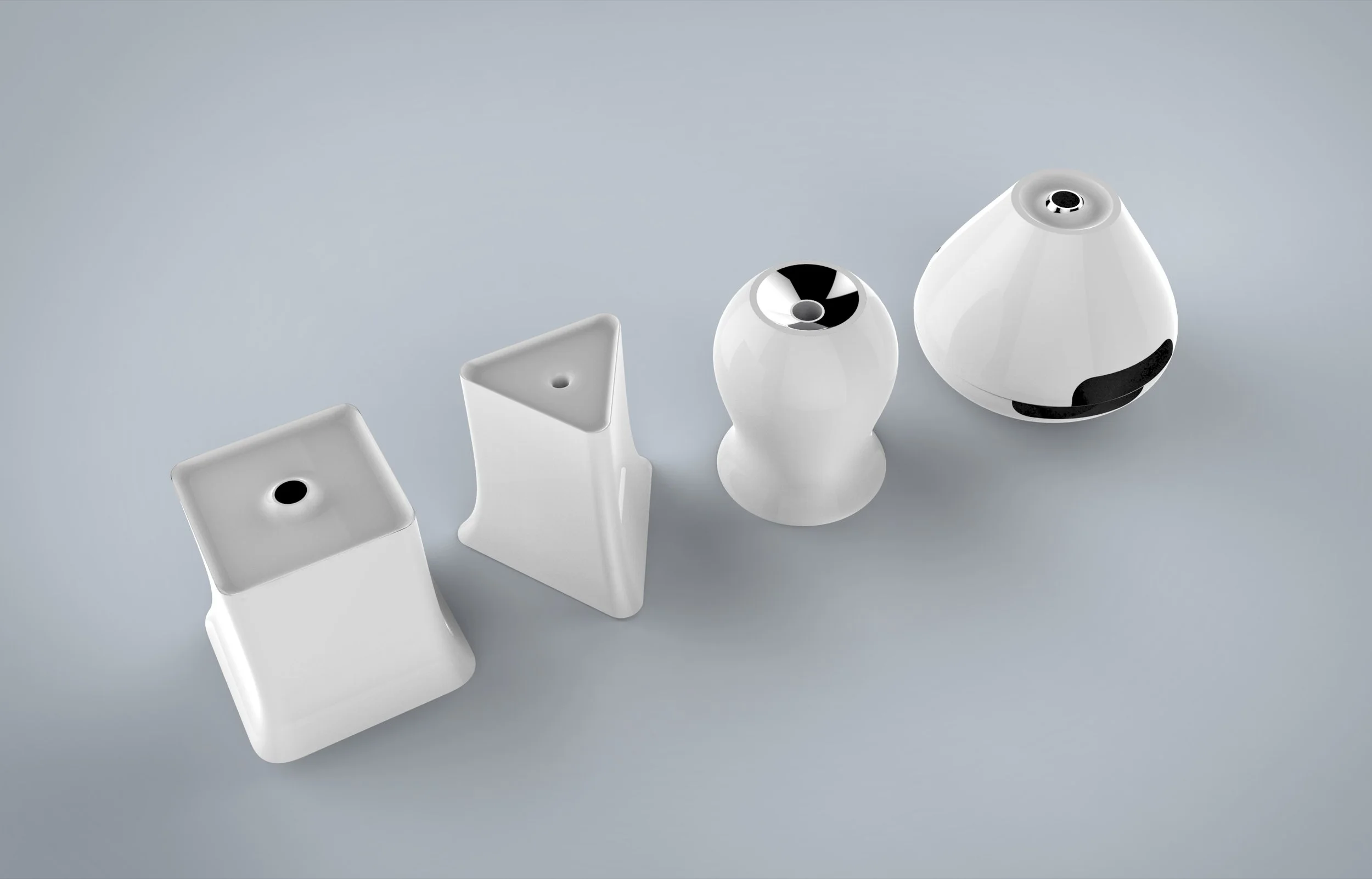
In collaboration with Speck Design, this project brought a major innovation to the lab automation market. With no existing design language to reference, the industrial design was built from the ground up. It encompassed overall form, material selection, color, and user interface, while the internal mechanical and electronic components were still being refined in parallel.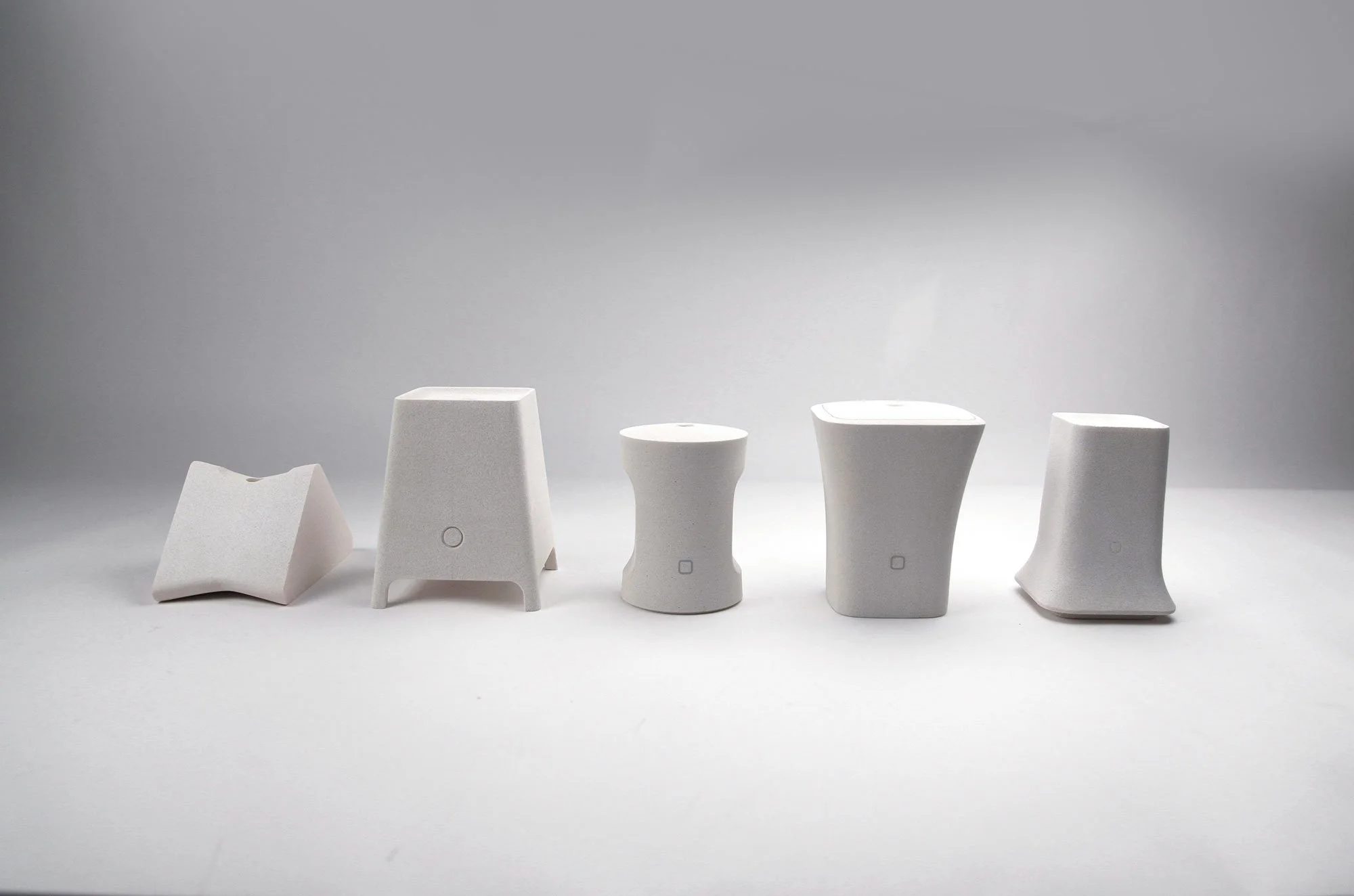
The design process ran in close step with the client's engineering development, requiring the form and interface to adapt continuously as internal components evolved. Rapid physical prototyping and iterative CAD refinement kept the design grounded in real constraints, allowing decisions to be made quickly and collaboratively rather than in isolation from the engineering team.
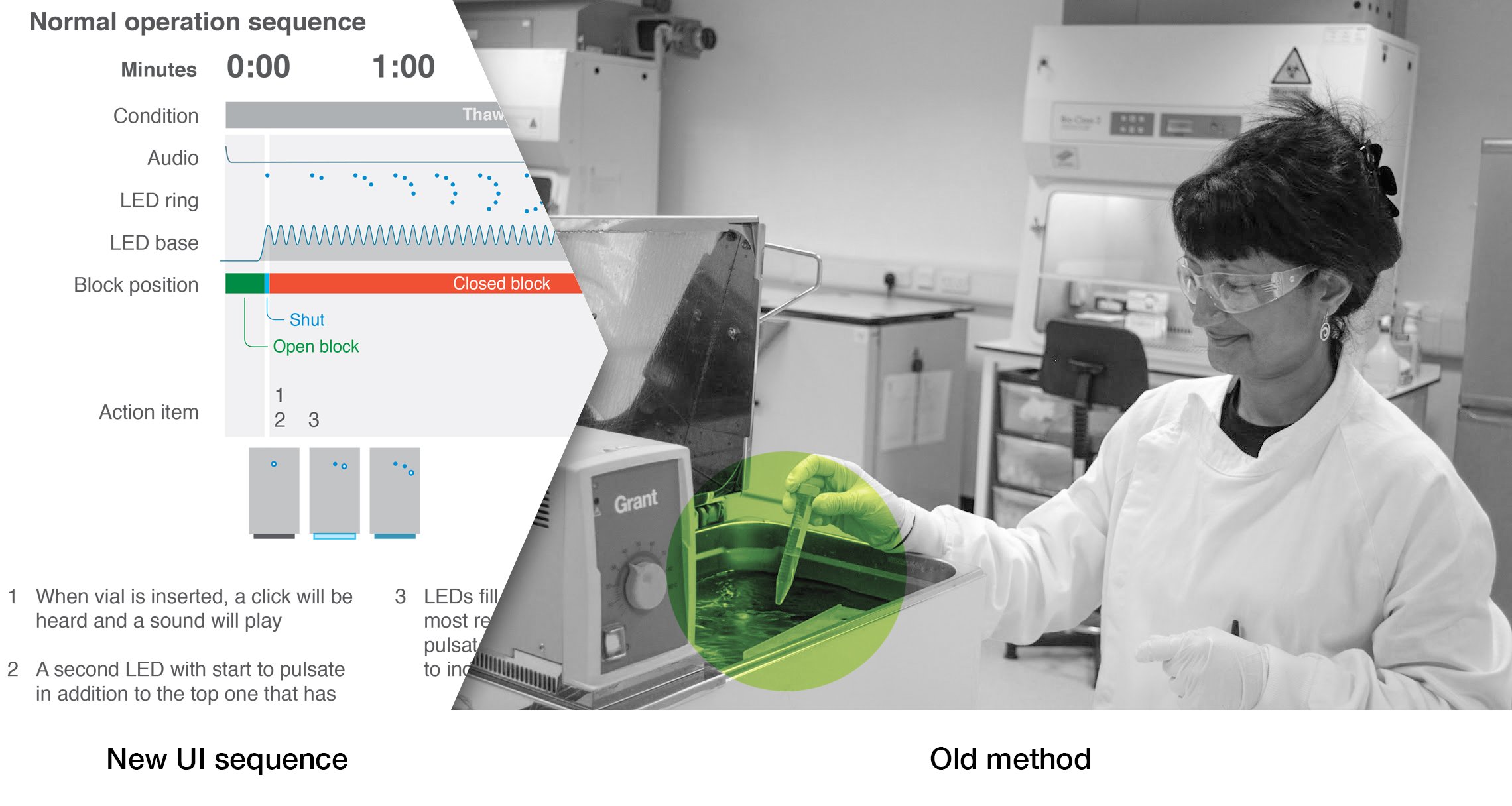
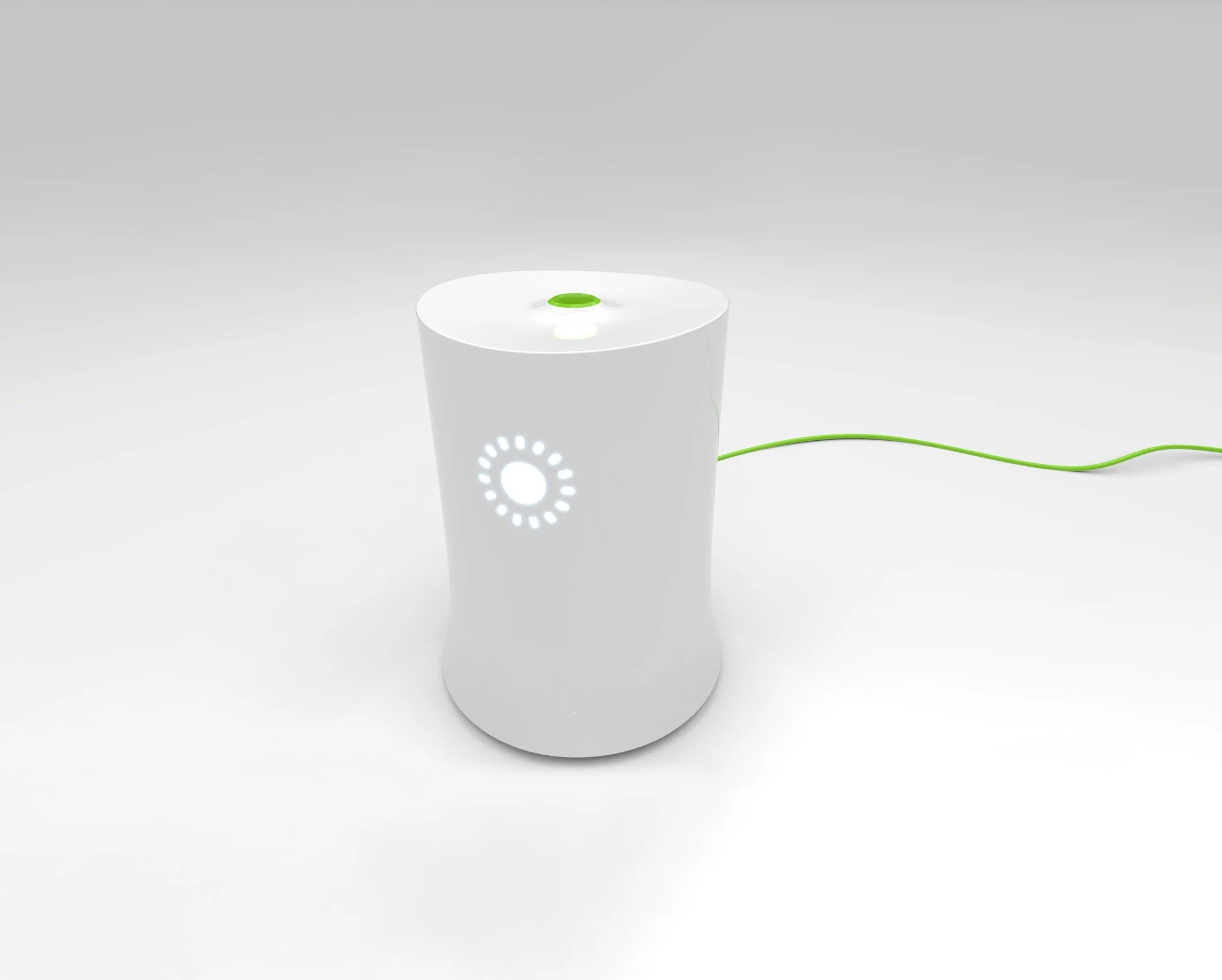
Early research into lab environments and operator behavior revealed a critical insight: the most important information on the device needed to be readable from across the room, not just up close. This led to replacing a proposed small OLED display with a large LED ring dial, a clock-like status indicator visible at a glance from a distance, requiring no change in behavior from the user and no new learning curve.
The device automates a thaw that used to require a tech to stand and manually melt a frozen vial in warm water. The real value was freeing them to do other work, but that only holds if they can tell where the device is in its cycle from anywhere in the lab, by sight and by sound. The small OLED the engineering team proposed failed that test. I replaced it with a clock-inspired ring of light, paired with audio, so the status is legible across the workspace with nothing new to learn.
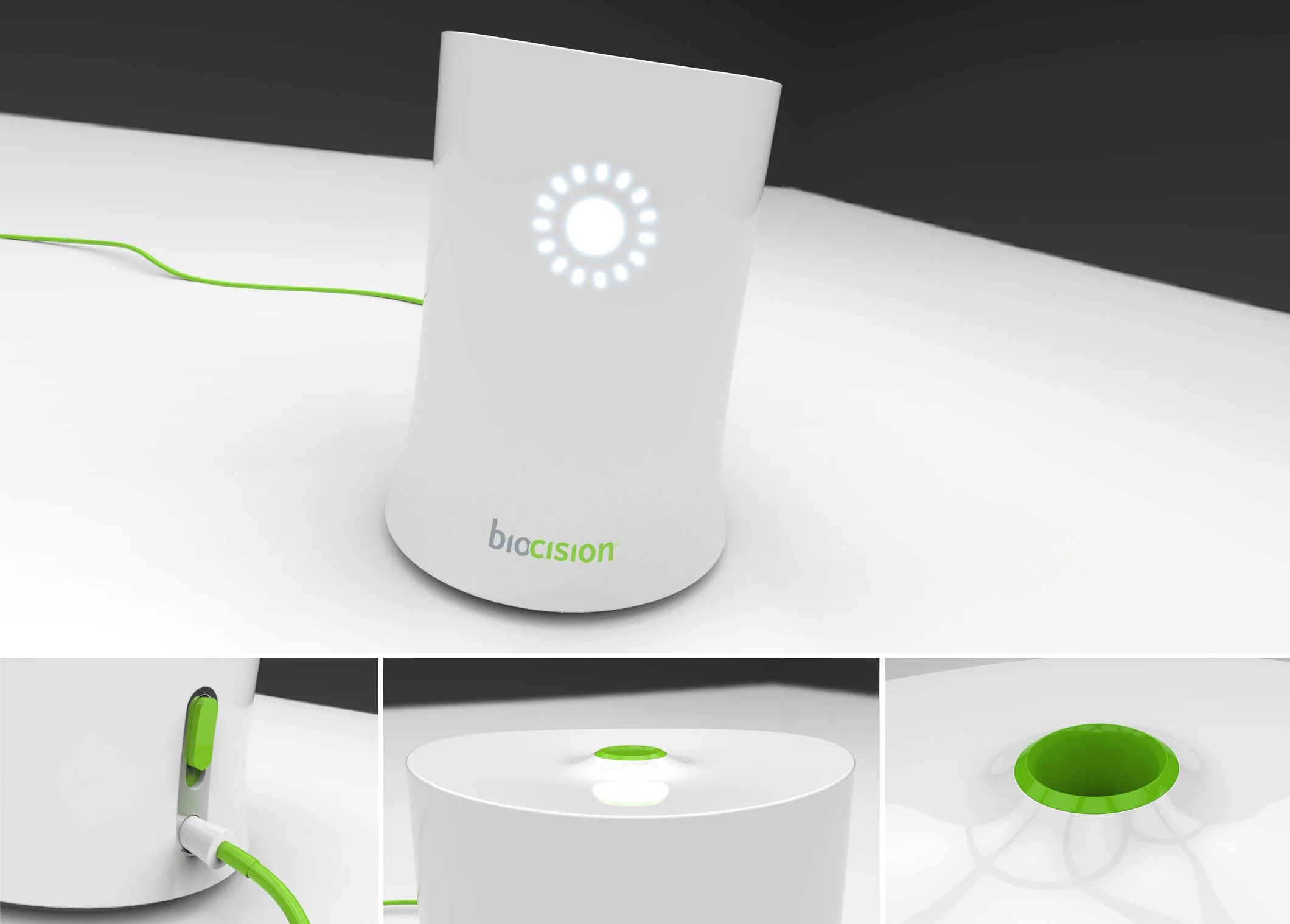
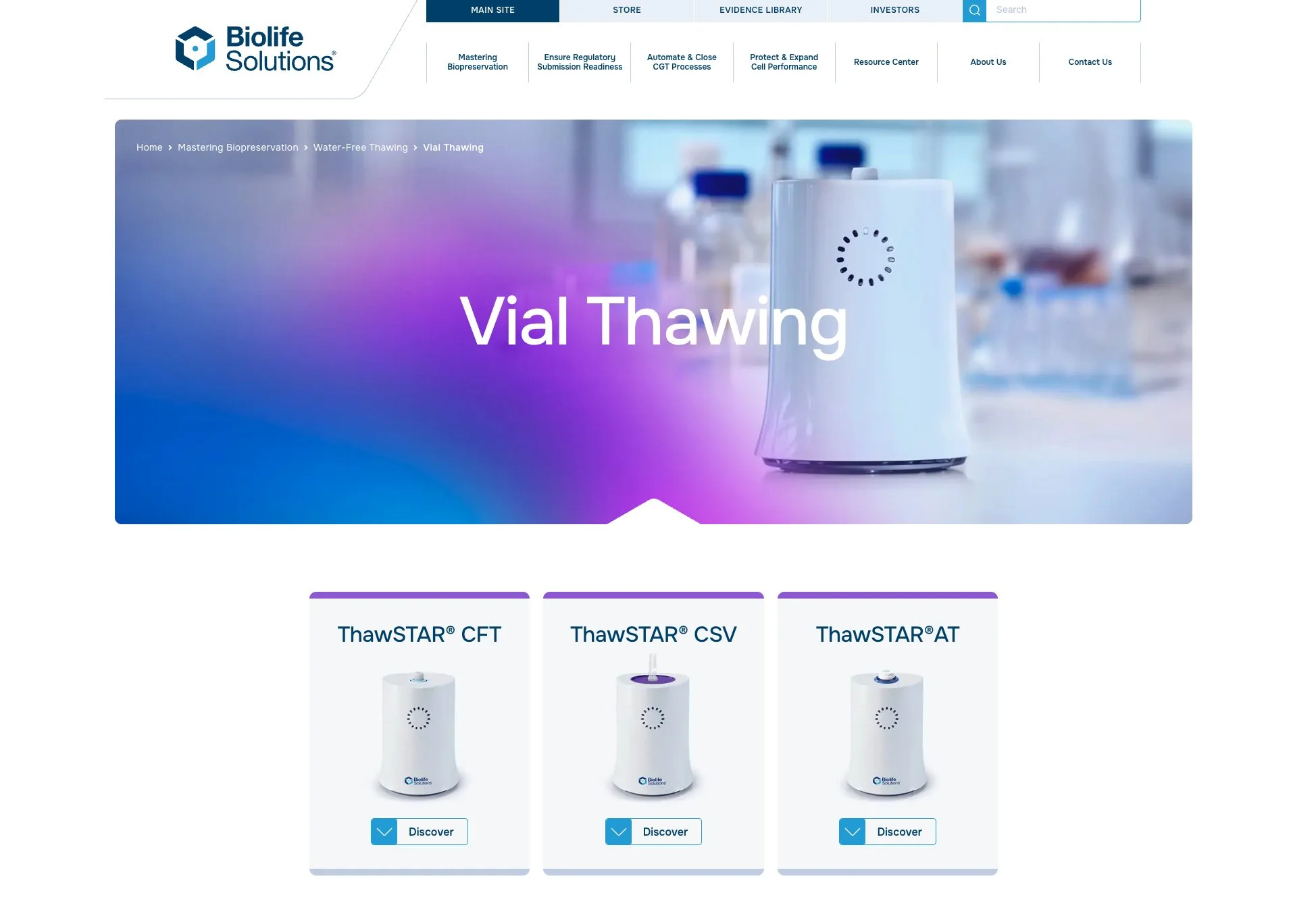
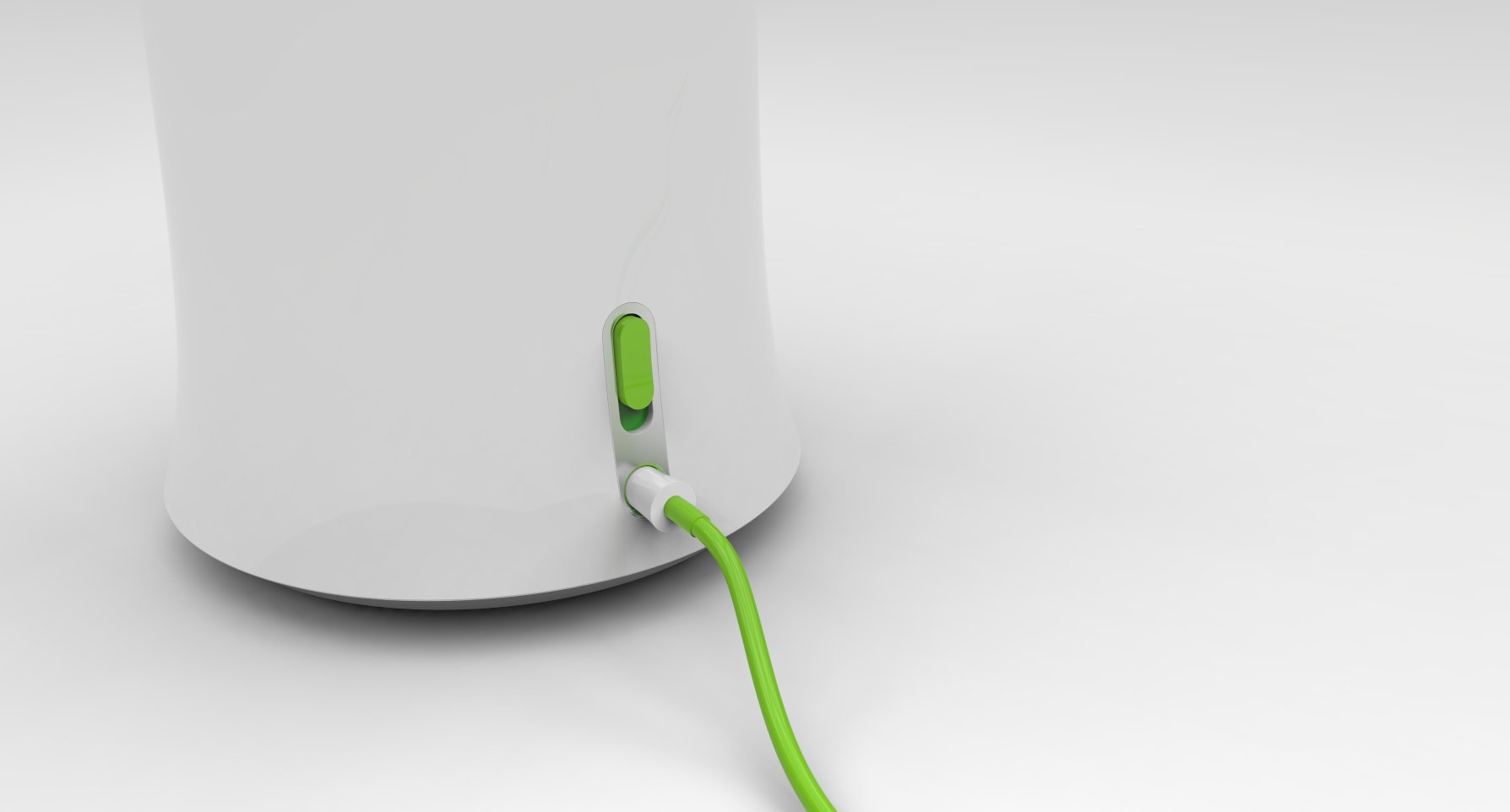
This design reached production as the ThawSTAR line. It launched identical to our final renders; the version on the market today has evolved a little and carries a different logo.